There is a category of brand campaign that does not ask for attention — it commands it. The campaign film that stops a room when it plays. The product commercial that people seek out and share, not because it was pushed to them but because it is genuinely compelling. The brand animation that a competitor watches and immediately recognizes as operating at a level of production ambition and visual quality they have not yet reached.
This category of work is cinematic 3D animation — and the gap between it and standard commercial 3D animation is not primarily a matter of budget. It is a matter of production philosophy, tool capability, and the willingness to treat a brand campaign film with the same creative and technical seriousness that a feature film production house brings to a theatrical release.
Maya is the tool that serious cinematic production is built in — not as a convention, but as a consequence of the software’s genuine capability advantage at the level of visual complexity, simulation accuracy, and rendering quality that cinematic work demands. This article explains what cinematic 3D animation is, how it is produced, and why it matters for brands operating in premium and competitive market categories.
Defining Cinematic 3D Animation

The word ‘cinematic’ is used loosely in production contexts — often to mean little more than ‘widescreen with atmospheric lighting.’ In the context of professional brand animation, it means something more specific: a production standard, a creative approach, and a technical execution level that is borrowed from the discipline of narrative filmmaking and applied to commercial brand communication.
Cinematic 3D animation is characterized by a set of production qualities that distinguish it from standard commercial animation.
| Quality Dimension | What It Means in Practice |
| Photorealistic rendering | Output that is indistinguishable from high-end live-action photography; physically accurate light simulation; no visual tells that reveal the work as CGI unless the brief calls for them |
| Cinematographic composition | Camera placement, movement, and framing informed by the principles of cinematography — focal length selection, depth of field, motivated camera movement, compositional hierarchy |
| Simulation-based effects | Physically-accurate fluid dynamics, cloth simulation, particle effects, and destruction that behave as the real-world equivalents would, not as stylized approximations |
| Performance-quality character work | Character animation that demonstrates the nuance, timing, and physical believability associated with skilled human performance animation — not the mechanical, cycle-based motion of lower production tiers |
| Professional sound design | Audio production at the same standard as the visual — original score or licensed music, full Foley sound design, voiceover direction at broadcast quality |
| Narrative visual structure | Creative direction that treats the brand campaign film as a story with a beginning, middle, and end — not as a product demonstration with background music |
Why Brands Invest in Cinematic Production Quality
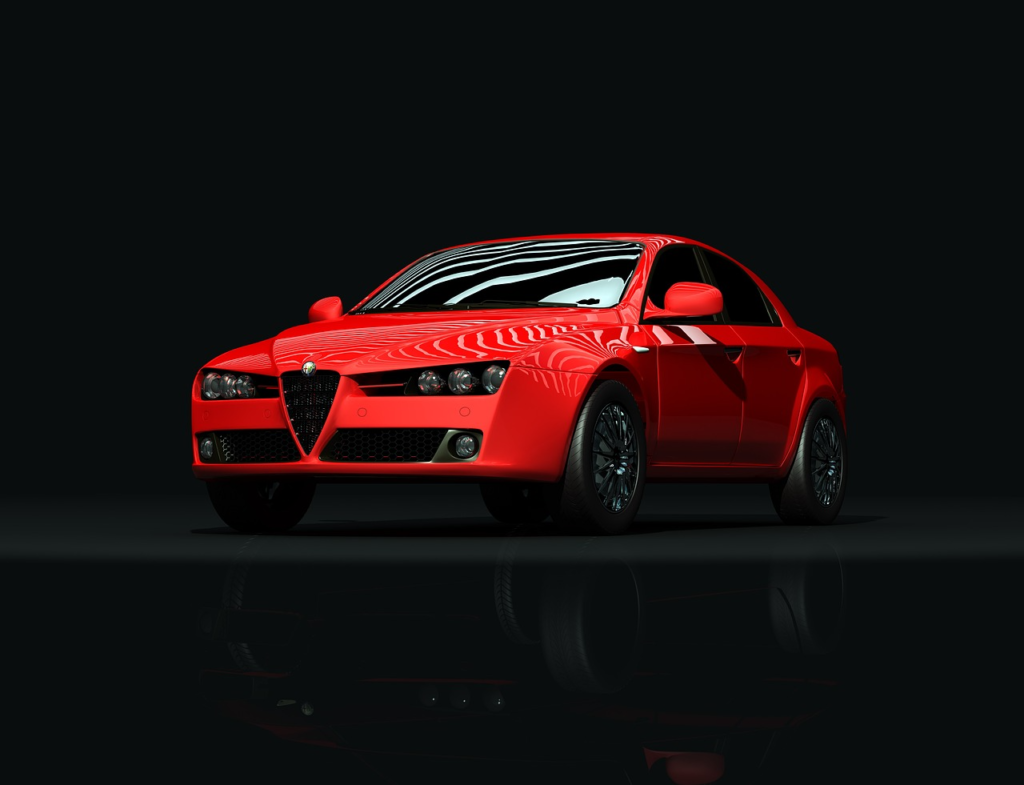
The commercial case for cinematic 3D animation is built on a straightforward premise: in a saturated content environment, production quality is a signal. It communicates something about the brand beyond the content of the animation itself.
The Quality Signal Effect
A viewer who watches a cinematically produced brand animation — even without consciously identifying the production qualities that distinguish it — registers a brand impression that is qualitatively different from the impression left by standard commercial animation. The visual sophistication, the physical credibility of the motion, the care evident in every frame create an inferred conclusion about the brand: this is a company that takes its work seriously, that invests in quality, that operates at a premium level.
For brands competing in premium market categories — luxury goods, enterprise technology, financial services, healthcare — this quality signal is not incidental to the marketing objective. It is the marketing objective. The campaign film communicates brand positioning through its production values as much as through its narrative content.
Competitive Differentiation at Category Level
In any market category, there is a visual standard — an implicit benchmark for the production quality of brand communication that consumers and business buyers have internalized from exposure to the category leaders. Cinematic 3D animation can raise a brand above that category standard, positioning it visually as a leader regardless of its current market position.
For challenger brands and growth-stage companies that have not yet established the market presence to be perceived as category leaders on reputation alone, a cinematic brand campaign film that exceeds the visual standard of the category is one of the most efficient tools for repositioning brand perception. Audiences judge quality by what they see — and what they see is the film.
Long Asset Life and Compounding Brand Value
A cinematically produced brand campaign film has a longer useful life than standard commercial content. Its visual quality does not date as quickly; its production standard does not become outdated by the next content cycle. Brands that produce cinematic quality consistently report using flagship campaign films for two to four years without significant visual obsolescence — a substantially longer asset life than standard commercial production provides.
Over that lifespan, the compounding brand impression created by consistent exposure to high-quality visual content is significant. Brand perception is built over time through repeated quality signals, and a cinematic brand film is among the most concentrated quality signals a brand can deploy.
| The production quality of a brand campaign film is itself a form of brand communication. The care invested in making something visually extraordinary tells the audience something about the brand that no headline or tagline can say as economically. |
The Maya Production Approach to Cinematic Brand Animation
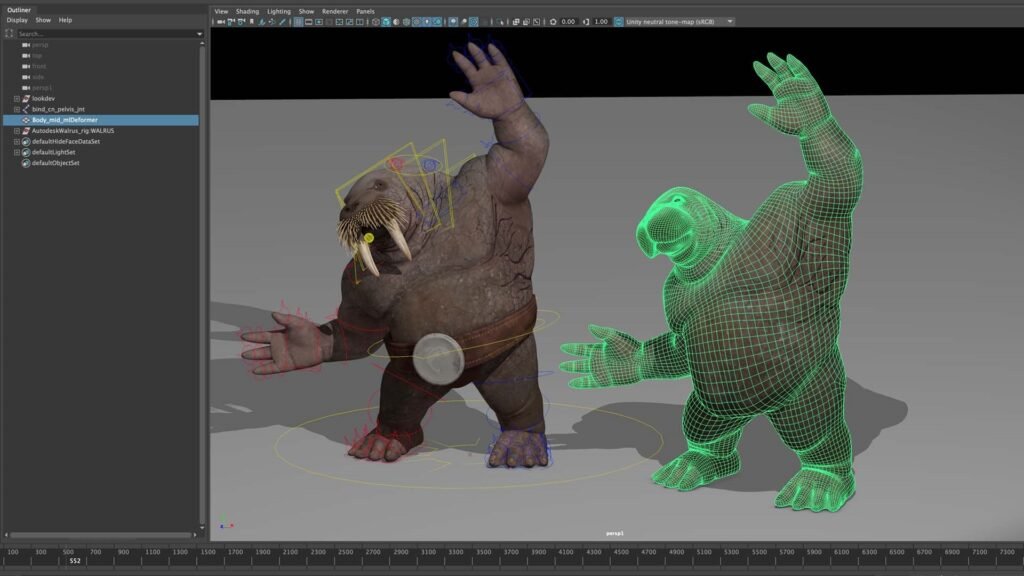
Producing cinematic 3D animation requires both the right creative approach and the right technical infrastructure. Maya provides the technical infrastructure — and the creative approach must be deliberately built around it.
Cinematographic Approach to the Virtual Camera
In Maya, the camera is a scene element like any other — it has a position, a focal length, a field of view, a depth of field, a shutter angle. Cinematic Maya productions treat the virtual camera with the same deliberateness that a director of photography brings to a real camera on a live-action set. Focal length selection creates the same optical characteristics — the telephoto compression that makes a product look physically imposing, the wide-angle distortion that creates spatial drama — as its live-action equivalent.
Camera movement in cinematic Maya production is motivated — every pan, push, orbit, and pull-back has a narrative reason. The camera reveals information in a sequence that builds visual and emotional tension. It does not simply orbit the product for completeness. It tells the viewer what to look at, when to look at it, and why it matters.
Lighting as Visual Storytelling
In cinematic production, lighting is not merely a technical prerequisite for visibility — it is a storytelling tool. The direction, quality, and color of light create mood, establish spatial relationships, reveal or conceal product detail, and guide the viewer’s emotional response to what they are seeing.
Arnold’s physically-based rendering engine allows Maya lighters to work with the same visual vocabulary as live-action cinematographers: key lights, fill lights, practical lights, motivated light sources, HDRI environment lighting. The lighting setup for a cinematic Maya production is as thoroughly considered as for a high-end photography shoot — with the advantage that every variable is precisely controllable and every adjustment is non-destructive.
Simulation at Production Scale
Cinematic brand campaigns frequently involve visual elements that require simulation: liquid, fabric, smoke, fire, particles, destruction. In Maya’s production pipeline, these simulations are built to the same standard used in film VFX production. A fluid simulation does not behave like a stylized cartoon approximation of liquid — it behaves like actual liquid, with the viscosity, surface tension, and response to force that physical reality produces.
This simulation fidelity is one of the most visible distinguishers between cinematic and standard commercial animation. When a premium beverage commercial shows liquid pouring, when a luxury fragrance brand shows its scent becoming a visual landscape, when a technology brand shows data as physically simulated particles — the physical accuracy of that simulation is what makes the sequence feel real rather than animated. Maya’s Bifrost and nCloth simulation systems are the production tools for this level of work.
Character Performance at Cinematic Standard
For brand campaigns that include character animation — a human figure, a branded avatar, a creature or mascot at feature quality — Maya’s rigging and animation systems enable the kind of performance nuance that cinematic work requires. Subtlety of expression, physical weight and momentum, the tiny secondary motions that distinguish a performance from a demonstration — these are the province of skilled Maya animators working with production-grade character rigs.
The difference between a character that moves and a character that performs is the difference between standard commercial animation and cinematic animation. Audiences respond to performance with the same emotional receptivity they bring to live-action acting — the quality of the character work directly affects the emotional impact of the campaign.
What Cinematic Production Requires From the Client
Commissioning cinematic 3D animation requires a different kind of client engagement than standard commercial production. The ambition of the work demands a proportional investment of strategic and creative input from the brand side.
- A clear brand positioning brief: Cinematic production communicates brand values through aesthetic choices. The studio needs to understand what the brand stands for, what it aspires to communicate, and what its visual identity represents before making the hundreds of micro-decisions that accumulate into a cinematic visual world.
- Approved narrative direction before production begins: Changes to narrative direction after cinematic production has started are expensive. The story, the structure, and the key visual sequences should be approved at storyboard and animatic stage before modeling and animation begin.
- Realistic timeline expectations: Cinematic 3D animation takes time. A 60-second campaign film produced to broadcast-quality Maya standards typically requires 10–20 weeks from brief to delivery. Compressed timelines produce compromised results. The production time is the investment — it cannot be shortened without reducing the quality it produces.
- Senior stakeholder alignment early: Nothing derails a cinematic production more reliably than senior stakeholder feedback at the end of a production cycle that could have redirected the work at its beginning. Ensure that the people with final approval authority are aligned with the creative direction before production commits to it.
The Benchmark Your Campaign Should Be Measuring Against
The benchmark for cinematic 3D animation is not other animation. It is live-action film production at commercial standard — the quality level of work produced by directors who have credits in television advertising and feature film, shot by directors of photography whose work appears at international festivals, finished in post-production facilities that handle broadcast network deliverables.
Maya-based cinematic animation is the tool that allows a brand to reach that benchmark without a live-action shoot, without physical sets, and without the logistical complexity that feature-quality live-action production requires. It is the format that democratizes cinematic production quality — making it accessible to brands with the strategic ambition to reach it, regardless of whether they have the infrastructure of a major studio behind them.
3D Animation Maya produces cinematic brand campaign animation for clients across the United States who are ready to operate at that standard. Contact our team to discuss your campaign brief.