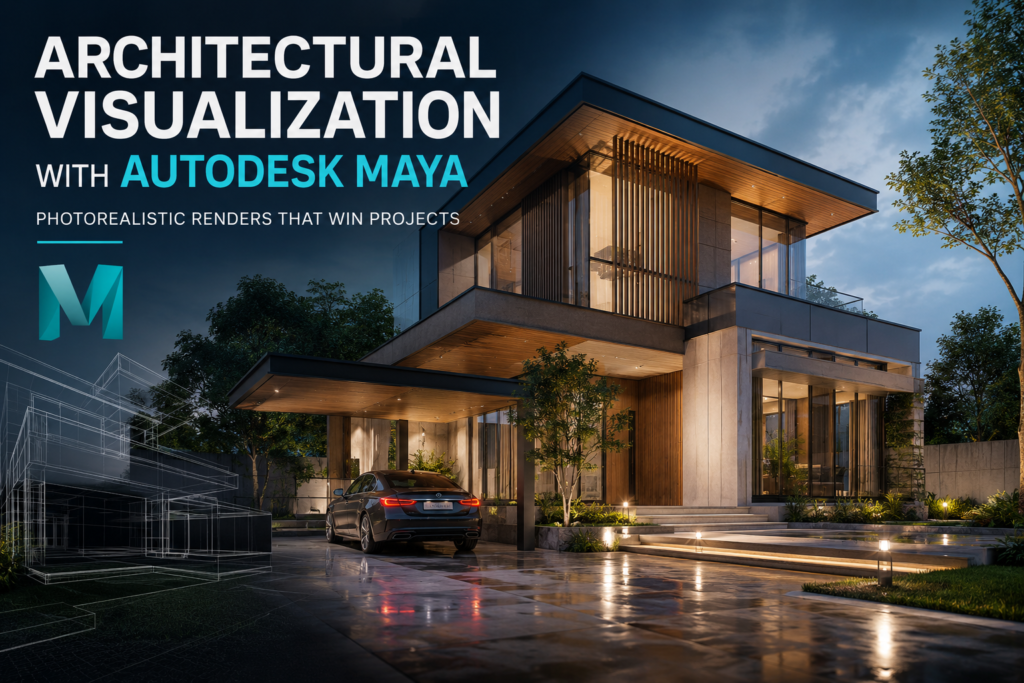
The decision to invest in a building — whether a residential purchase, a commercial lease, a development financing round, or a planning approval — is one of the highest-stakes decisions most people and organizations make. It is a decision made largely on the basis of visualization: images, animations, and spatial experiences that communicate what a building will be before it exists.
The quality of that visualization is not a presentation aesthetic. It is a commercial variable. Developers who present their projects with photorealistic, spatially convincing, atmospherically accurate visualization consistently outperform those relying on schematic renderings or basic CAD output — in pre-sales, in financing conversations, in planning approvals, and in the competitive positioning of their projects against alternatives.
Autodesk Maya, combined with the Arnold rendering engine, is the production environment that produces architectural visualization at the highest standard available in commercial production. This article explains why — and what that standard looks like in practice for architectural and real estate clients across the United States.
What Architectural Visualization Actually Does for a Project
Before examining the technical production side, it is worth grounding the conversation in the commercial function that architectural visualization serves — because the production standard required follows directly from that function.
Pre-Sales and Pre-Leasing Before Construction
The most commercially significant application of architectural visualization is the ability to sell or lease a project before it is built. A residential development that can show prospective buyers exactly what their apartment will look like — its spatial proportions, its natural light at different times of day, its material finishes, its relationship to surrounding buildings and landscape — is selling something the buyer can make an informed decision about. A development relying on architectural drawings and floor plans is asking buyers to make a leap of imagination that many will not make.
The commercial impact of this difference is direct and measurable: pre-sales rates, average time-to-contract, and price-per-square-foot all improve when the visualization gives buyers genuine spatial and aesthetic confidence. The investment in photorealistic visualization typically pays for itself through the pre-sales it enables.
Development Financing and Investor Relations
Real estate development financing is a relationship-intensive process in which presentation quality materially affects investor confidence. A development team that presents its project with immersive, photorealistic visualization — rendering the project in its urban context, showing the quality of proposed materials and finishes, communicating the spatial experience of key amenity spaces — is presenting a project that the investor can visualize as built. This visual confidence is not incidental to the financing relationship: it reduces the perceived risk of the investment.
For larger commercial developments seeking institutional financing, the quality of the visualization package is often a formal criterion in the evaluation process. Institutional investors have been exposed to the highest-standard visualization from major development groups and apply that standard as a benchmark when evaluating new opportunities.
Planning and Regulatory Approvals
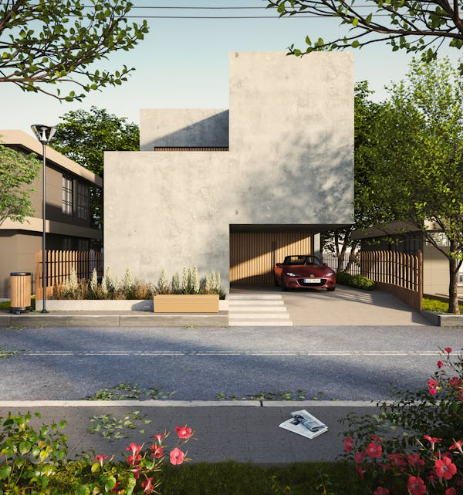
In many U.S. jurisdictions, planning approvals for significant developments require the applicant to demonstrate how the project will integrate with its surrounding context — its massing relative to neighboring buildings, its material relationship to the streetscape, its landscape treatment, its impact on sunlight and shadow in the surrounding area. Photorealistic visualization that accurately addresses these questions — showing the project in its actual urban context, with accurate light behavior at relevant times and seasons — is a substantively more persuasive submission than schematic drawings or early-stage renders.
Planning boards and community stakeholders respond to visual evidence of quality and contextual sensitivity. The photorealism of the visualization communicates, implicitly, the seriousness of the development team’s commitment to the project as presented.
| Architectural visualization at photorealistic standard is not a presentation expense — it is a development marketing investment that consistently generates returns multiples of its production cost through pre-sales performance, financing confidence, and planning credibility. |
Why Maya and Arnold Are the Standard for Premium Architectural Visualization
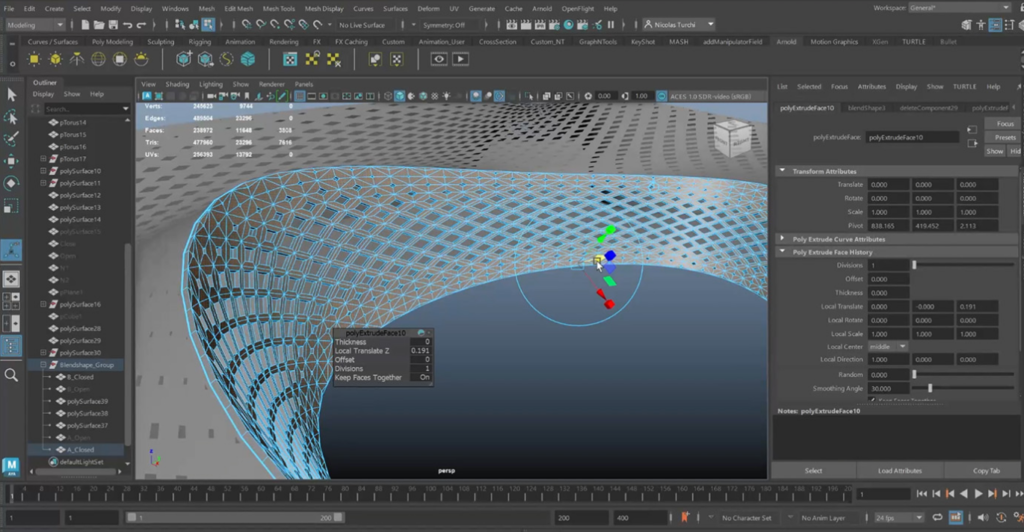
Architectural visualization is produced across a range of tools — from real-time game engines like Unreal Engine to purpose-built visualization applications like Lumion and D5 Render. Each has its place in the production ecosystem. Maya with Arnold occupies a specific and important position: the premium end of the quality spectrum, where the visual standard is defined by physical accuracy rather than production speed.
Arnold’s Global Illumination: Physical Light Behavior
The quality of light in an architectural render is the single most important variable in how convincingly the space reads as real. Arnold’s global illumination system simulates the physical behavior of light with a fidelity that real-time rendering engines cannot match at equivalent settings: light bouncing between surfaces with accurate color bleeding, shadow softness governed by the physical size of the light source, the subtle interplay of direct and indirect light that gives architectural spaces their spatial depth and atmosphere.
The practical outcome of this fidelity is a render where interior spaces are lit with the same complexity and spatial richness as a high-end architectural photograph. The warm quality of late afternoon sun entering through a glazed facade. The cool, diffuse light of a north-facing studio. The dramatic contrast of a lobby lit by a single south-facing clerestory. These qualities are achievable in Arnold at the accuracy level that architectural photography has trained clients and buyers to expect.
HDR Image-Based Lighting and Sky Simulation
For exterior renders and visualizations that include natural daylight, Arnold’s support for high-dynamic-range image-based lighting and physically-based sky models produces exterior light conditions that are accurately representative of specific geographic locations, times of day, and seasonal light angles. A development in Miami at 9am on a December morning can be rendered with accurate light direction, color temperature, and shadow angle — producing visualization that is forensically accurate to the project’s actual light environment.
This accuracy is commercially significant for planning and regulatory submissions where the impact of the development on surrounding shadow patterns must be accurately represented. It is equally significant for pre-sales visualization, where the accuracy of the rendered light environment builds buyer confidence in the truthfulness of the visualization.
Maya’s Modeling Environment for Architectural Geometry
Architectural models — particularly for contemporary buildings with complex facade treatments, parametric geometries, or large-scale landscape elements — benefit from Maya’s modeling environment in specific ways. Maya’s NURBS modeling capabilities handle curved and complex-profile architectural elements with precision. Its procedural modeling and instancing tools manage the repetitive geometry of large-scale facade elements — window units, cladding panels, structural bays — with efficiency that reduces both production time and scene management complexity.
For projects involving existing buildings or urban context that must be accurately represented in the visualization, Maya’s ability to import and process survey data, photogrammetry outputs, and GIS-sourced geometry enables the accurate placement of new development proposals within their real-world context.
The Architectural Visualization Production Process in Maya
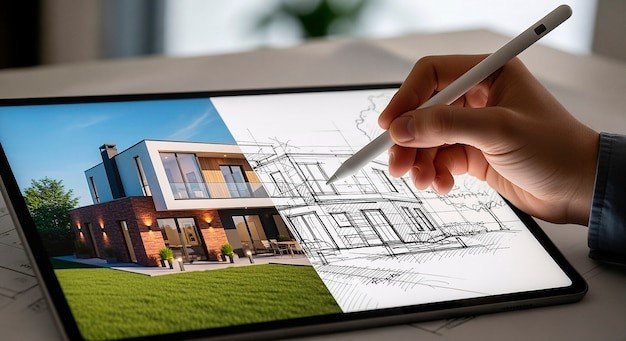
Model Preparation and BIM Integration
Architectural projects typically begin with BIM (Building Information Modeling) data produced in Revit or a similar application. The translation from BIM to Maya-ready geometry is a critical production step: BIM models contain enormous geometric complexity and non-visual data that must be cleaned, optimized, and reorganized for rendering performance without losing the geometric accuracy that the visualization requires.
An experienced Maya archviz studio has developed efficient BIM-to-Maya workflows that preserve design accuracy while producing scene geometry that renders efficiently. This workflow knowledge is one of the practical differentiators between studios that claim architectural visualization capability and those that can execute it reliably at production timelines.
Material and Finish Library Development
The credibility of an architectural render depends on the accuracy of its materials. Concrete must read as concrete. Timber must read as timber — with the correct grain direction, reflectivity, and surface variation. Glass must handle reflections and light transmission with physical accuracy. Metal panels must respond correctly to the direction and quality of light.
Professional Maya archviz studios maintain extensive material libraries developed and tested under production conditions — materials that have been refined through real project experience to produce accurate results across a range of lighting conditions. This library is a production asset that accelerates accurate material representation on new projects.
Camera Study and Composition
Architectural visualization is photography without a physical camera. The same principles of compositional photography apply: lens selection for appropriate perspective compression, foreground elements that establish scale and depth, camera height that produces a natural viewer’s-eye relationship to the space, and shot selection that shows the building at its most spatially and atmospherically compelling.
The most effective architectural visualization studios approach camera study with the same intentionality as a professional architectural photographer. Shot selection is not a technical afterthought — it is a creative decision that determines which qualities of the architecture the visualization will communicate.
Animated Walkthrough and Flythrough Production
Still renders establish quality and atmosphere. Animated walkthroughs and flythroughs communicate spatial sequence — the experience of moving through and around a building that static images cannot convey. Maya’s camera animation tools enable the production of smooth, cinematographically composed walkthroughs that guide the viewer through the space in a deliberate narrative sequence: arrival, entry, key amenity spaces, views, private spaces.
For residential developments, the walkthrough from approach through lobby, amenity level, and into a representative apartment — with accurate daylighting, material finishes, and spatial proportions — is the closest available approximation to the experience of physically visiting the completed building. Its impact on purchase decisions is substantial.
What Clients Should Prepare for a Maya Archviz Engagement
The quality of an architectural visualization engagement is directly influenced by the completeness of the design data and reference the client provides. The following preparation maximizes production efficiency and output quality.
- BIM or CAD model: The most complete available model of the development, exported in a Maya-compatible format (FBX preferred). Include all facade elements, interior partitions, and landscape elements at the highest level of detail available.
- Material and finish specifications: The developer’s confirmed material palette — cladding types, glazing specifications, interior finish selections — with manufacturer data sheets and physical samples or high-resolution photography where available.
- Context data: Survey information, neighboring building geometry (even simplified), street furniture, and landscape context. The more accurately the surrounding environment is represented, the more credible the visualization.
- Light and view study requirements: Specific views and times of day required for the visualization package — key external viewpoints, interior views at morning, midday, and evening, shadow impact studies if required for planning.
- Scope and format: How many still renders, what resolution, and whether animated walkthroughs are required. Early scope definition allows the studio to plan the production pipeline and timeline accurately.
The Investment That Wins Projects
Architectural visualization produced at Maya and Arnold standard is an investment in the commercial performance of a development — not a cost of preparing a presentation. The pre-sales it enables, the financing confidence it builds, the planning credibility it establishes, and the competitive advantage it provides against projects presenting at lower visualization quality all generate returns that consistently justify the production investment.
For developers, architects, and real estate teams working on projects where the visualization quality directly influences the commercial outcome, the question is not whether to invest in photorealistic archviz — it is which studio produces it at the standard required.
3D Animation Maya produces architectural visualization for developers, architects, and real estate teams across the United States — at the Maya and Arnold production standard that serious projects require. Contact our team to discuss your project.