3D Animation Maya | Published: Monday, March 23, 2026 | Target Keyword: Autodesk Maya 3D animation studio professional | ~2,000 words
When ILM renders a visual effects sequence for a major studio release, they use Maya. When a global automotive brand commissions a photorealistic product film, the chances are the animation pipeline runs through Maya. When a pharmaceutical company needs a biologically accurate visualization of a drug mechanism of action for its marketing and medical education materials, the production standard calls for Maya.
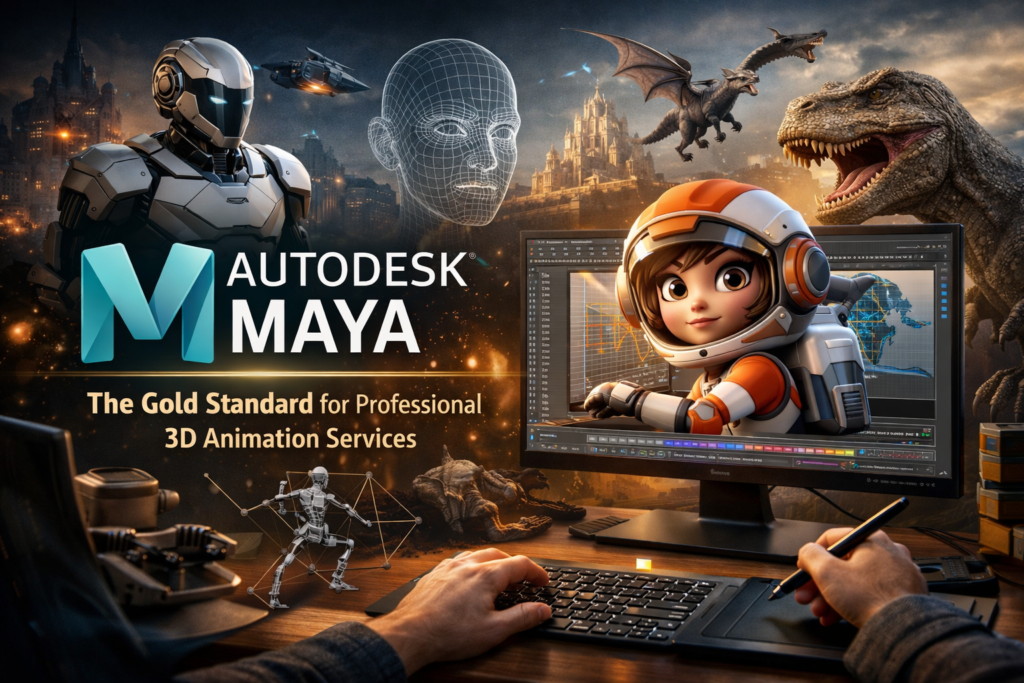
This is not coincidence, and it is not inertia. Autodesk Maya has held its position as the industry standard software for professional 3D animation for decades because it continues to outperform every alternative on the criteria that matter most to commercial and enterprise production: rigging capability, rendering quality, simulation accuracy, pipeline integration, and scalability. For businesses commissioning high-stakes animation work, understanding why Maya is the tool of choice among the world’s leading studios is not a technical detail — it is a procurement criterion.
This article explains the Maya advantage in plain commercial language. Not for artists, but for the business decision-makers who need to understand what they are buying when they commission professional 3D animation.
What Is Autodesk Maya?
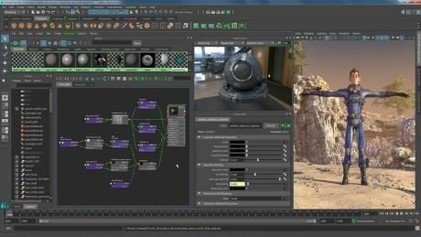
Autodesk Maya is a professional three-dimensional computer graphics application used for modeling, rigging, animation, simulation, rendering, and compositing. Originally developed by Alias Systems Corporation and acquired by Autodesk in 2006, Maya has been the dominant production tool in film, television, games, and commercial animation for more than two decades.
It is the software behind visual effects in countless major film franchises, the character animation in dozens of acclaimed feature animations, and the product visualization work for some of the world’s most recognizable consumer brands. Its longevity in an industry defined by rapid technological change is a testament to its fundamental architectural superiority for complex, professional-grade production work.
Maya is not the tool that studios use because it is the most accessible. It is the tool they use because it is the most capable — and in high-stakes commercial production, capability is the only variable that ultimately matters.
The Technical Foundations of Maya’s Commercial Advantage
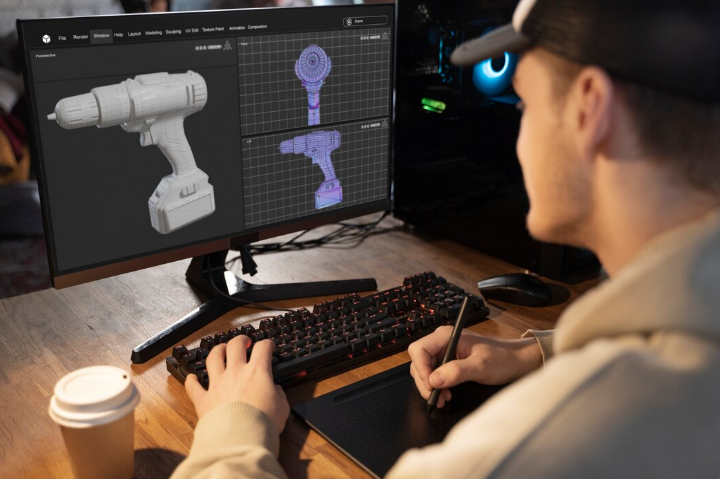
For business decision-makers evaluating studios, the specific technical advantages of Maya translate into concrete production outcomes. Here are the capabilities that make Maya the professional standard — explained in terms of what they mean for your project.
Arnold Renderer: The Photorealism Engine
Maya is tightly integrated with Arnold, Autodesk’s production-proven rendering engine. Arnold uses a physically-based, unbiased Monte Carlo ray tracing approach to simulate how light behaves in the real world — calculating how photons bounce, absorb, scatter, and transmit through every material in a scene. The result is photorealistic imagery that is indistinguishable from high-end photography when executed at professional standard.
For product visualization, this means a rendered image of your product that captures every surface nuance — the subtle reflection on brushed aluminum, the translucency of colored plastic, the micro-surface variation of matte coatings. For architectural visualization, it means interior renders with accurate natural and artificial light behavior that give clients a convincing experience of a space before it is built. Arnold’s output quality is the reason clients who have seen Maya-rendered work often cannot believe it is computer-generated.
Industry-Leading Rigging and Character Animation
Rigging is the process of creating the internal skeletal and control structure that allows a 3D character or mechanical object to move realistically. Maya’s rigging toolkit is the most mature and feature-complete in the industry. Its node-based architecture allows riggers to build extremely complex, production-grade control systems — enabling the kind of expressive, physically believable character performance that defines premium animation quality.
For businesses commissioning character animation — brand mascots, human characters for commercials or training content, product assembly animations with moving parts — the quality of the rig directly determines the quality of the final animation. A Maya-rigged character moves with a fluency and believability that is structurally difficult to achieve in less capable software. This is why every major animation studio that produces character work at professional standard uses Maya for its rigging pipeline.
Simulation and Dynamics: Animating the Real World
Maya’s simulation capabilities — fluid dynamics, cloth simulation, particle systems, rigid and soft body dynamics, hair and fur — allow animators to recreate the physical behavior of real-world materials with high accuracy. These capabilities are what enable the simulation of liquid pouring, fabric flowing, smoke dispersing, or complex mechanical interactions.
For commercial production, this means the difference between a product animation that looks technically correct and one that feels physically real. A premium beverage brand’s product film, for example, might require fluid dynamics to simulate liquid in a glass. A fashion brand’s product visualization might require cloth simulation for realistic draping. A pharmaceutical animation might require particle systems to depict molecular diffusion. Maya handles all of these applications with a level of physical accuracy that defines broadcast and commercial production standards.
Pipeline Integration and Scalability
Professional animation production is not a single-person workflow. It involves teams of artists working simultaneously on different aspects of a project — modelers, riggers, animators, lighters, effects artists, compositors. Maya is designed from the ground up for this collaborative, pipeline-integrated production model.
It exports to and imports from every major related application: Nuke for compositing, Houdini for advanced effects, Substance for texturing, ZBrush for high-resolution sculpting, Unreal Engine for real-time rendering. This compatibility means that a Maya-based studio can access the best-in-class tool for every aspect of production without sacrificing integration. For clients commissioning complex, multi-deliverable projects, this pipeline integrity translates directly into production efficiency and output consistency.

Abstract technical capability is only relevant insofar as it produces better outcomes for the businesses commissioning the work. Here is how Maya’s advantages manifest in the projects that matter to corporate and agency clients.
| Project Type | How Maya’s Capabilities Translate to Client Outcomes |
|---|---|
| Premium Product Visualization | Arnold rendering produces imagery indistinguishable from professional photography; material and lighting accuracy reflects physical product truth with precision |
| Brand Commercial / Film | Full simulation capability (fluids, cloth, particles) enables visual sequences impossible in live action; character rigs support expressive performance at broadcast quality |
| Architectural Visualization | Physically-accurate global illumination and light simulation produces renders that give clients and investors accurate spatial experience before build |
| Medical / Scientific Animation | Maya’s precision and control enable biological accuracy required for regulated marketing materials and clinical communication |
| Character and Mascot Animation | Industry-leading rigging produces character motion with the fluency and expressiveness that distinguishes premium brand animation from generic alternatives |
| Industrial / Engineering Animation | CAD-to-Maya pipeline enables accurate visualization of mechanical systems, assembly sequences, and engineering processes |
Why Studio Tool Choice Matters to Business Buyers
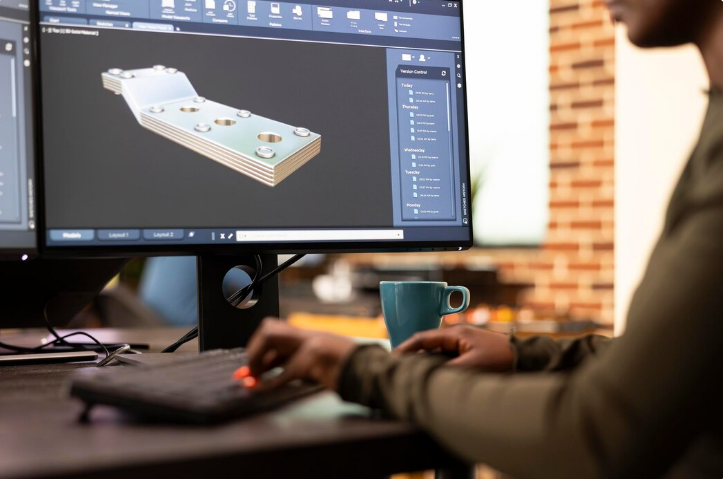
The software a studio uses is not merely a technical operational detail — it has direct implications for the quality ceiling of the work they can produce, the range of production challenges they can solve, and the professional peer group they belong to. A studio that produces professional animation in Maya is, by definition, operating in the same technical environment as the world’s leading visual effects houses and animation studios.
This matters for several reasons. First, it means the studio’s artists are trained to industry standard — Maya proficiency is a professional benchmark in a way that fluency in less demanding tools is not. Second, it means the studio can reliably accept and process client assets from any professional pipeline without compatibility friction. Third, it means the studio’s output will meet the technical specifications required by every professional distribution channel, from broadcast television to streaming platforms to premium digital advertising.
The Alternative Tools: An Honest Assessment
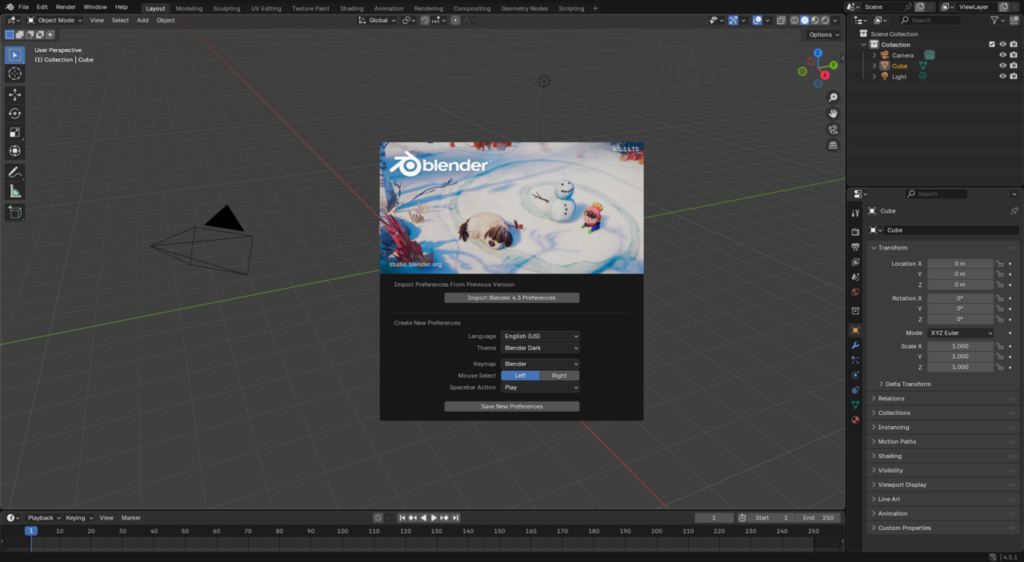
It would be disingenuous to suggest that every legitimate 3D animation studio uses Maya. Blender, Cinema 4D, 3ds Max, and other tools are used by skilled professionals to produce good quality work. For certain applications — particularly motion graphics, stylized animation, and lower-budget production — alternative tools can be entirely appropriate.
The distinction becomes commercially significant when the project requires the specific capabilities where Maya has no peer: complex character rigging at performance-animation quality, physically-accurate simulation at broadcast standard, photorealistic rendering at the level required for premium product visualization and film-quality commercial production, and multi-artist pipeline integration at enterprise scale.
For businesses whose visual content requirements sit at the premium end of any of these categories, the studio’s tool choice is a meaningful quality signal. It is a reasonable and informed question to ask any studio you are evaluating: what is your primary 3D production tool, and why?
Choosing a Maya Studio: What to Look For
⦁ Portfolio evidence of Maya-specific capability: photorealistic rendering, complex rigging, simulation work
⦁ Demonstrated experience in your industry or production category
⦁ Arnold or equivalent production renderer in the studio’s pipeline (not reliance on real-time or game-engine rendering for commercial deliverables)
⦁ Pipeline transparency: can the studio describe their production workflow and the role of Maya within it?
⦁ Asset delivery standards: does the studio provide source files and high-resolution masters, not just compressed deliverables?
⦁ U.S.-based production capability: domestic studios offer legal clarity, time-zone alignment, and direct accountability
The Studio Behind This Article
3D Animation Maya is a professional studio specializing in Autodesk Maya-based production for businesses, agencies, and enterprises across the United States. Our work spans product visualization, brand commercials, architectural animation, medical visualization, and character production — all produced to the technical standards that Maya enables and that premium clients require.
The choice to build our studio around Maya is not incidental to our work — it defines it. Every project we take on is an opportunity to demonstrate what the industry’s premier tool produces when it is used by artists who have invested years in mastering it.
If you are evaluating studios for a project that demands production quality without compromise, we invite you to view our portfolio and contact our team to discuss your brief.